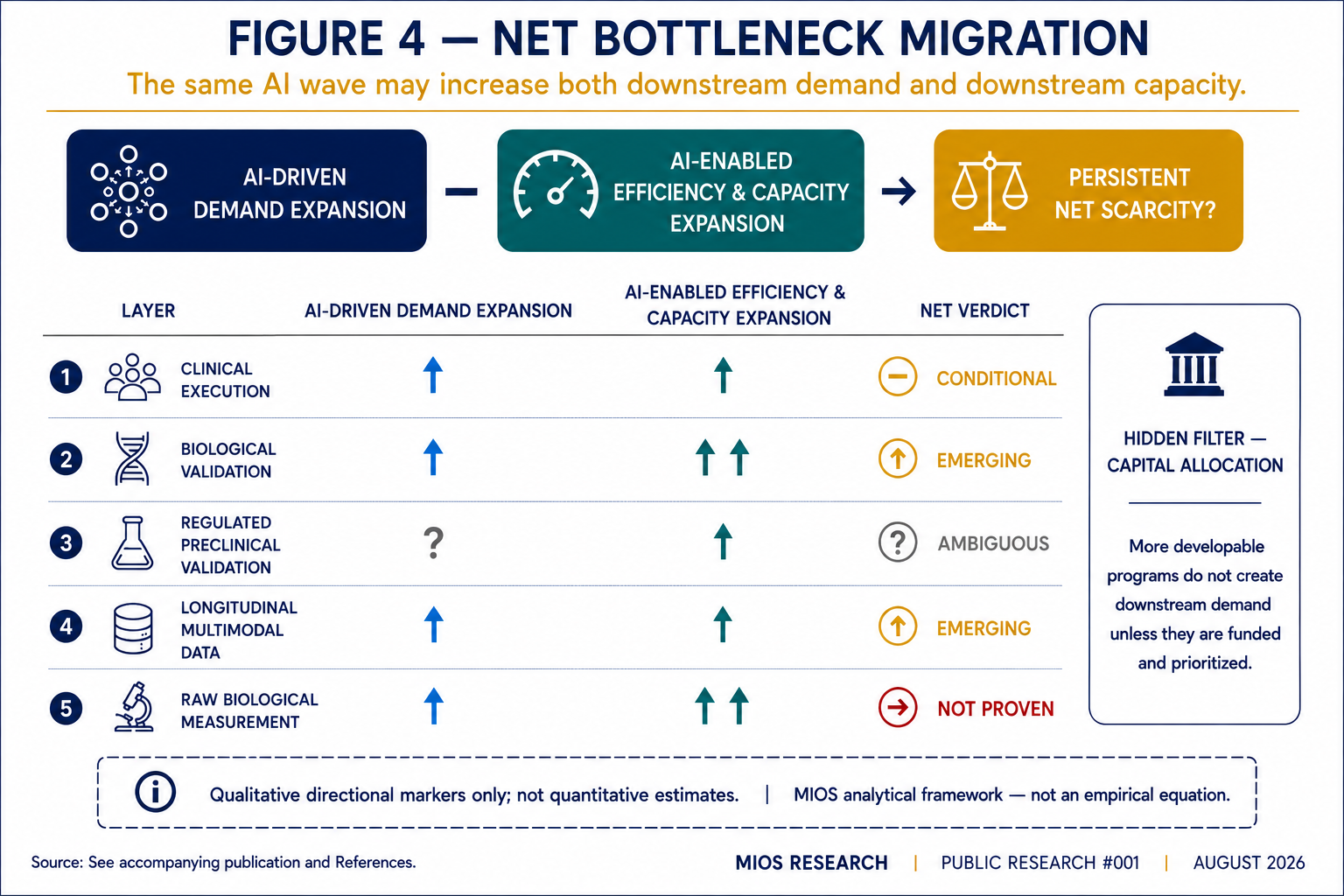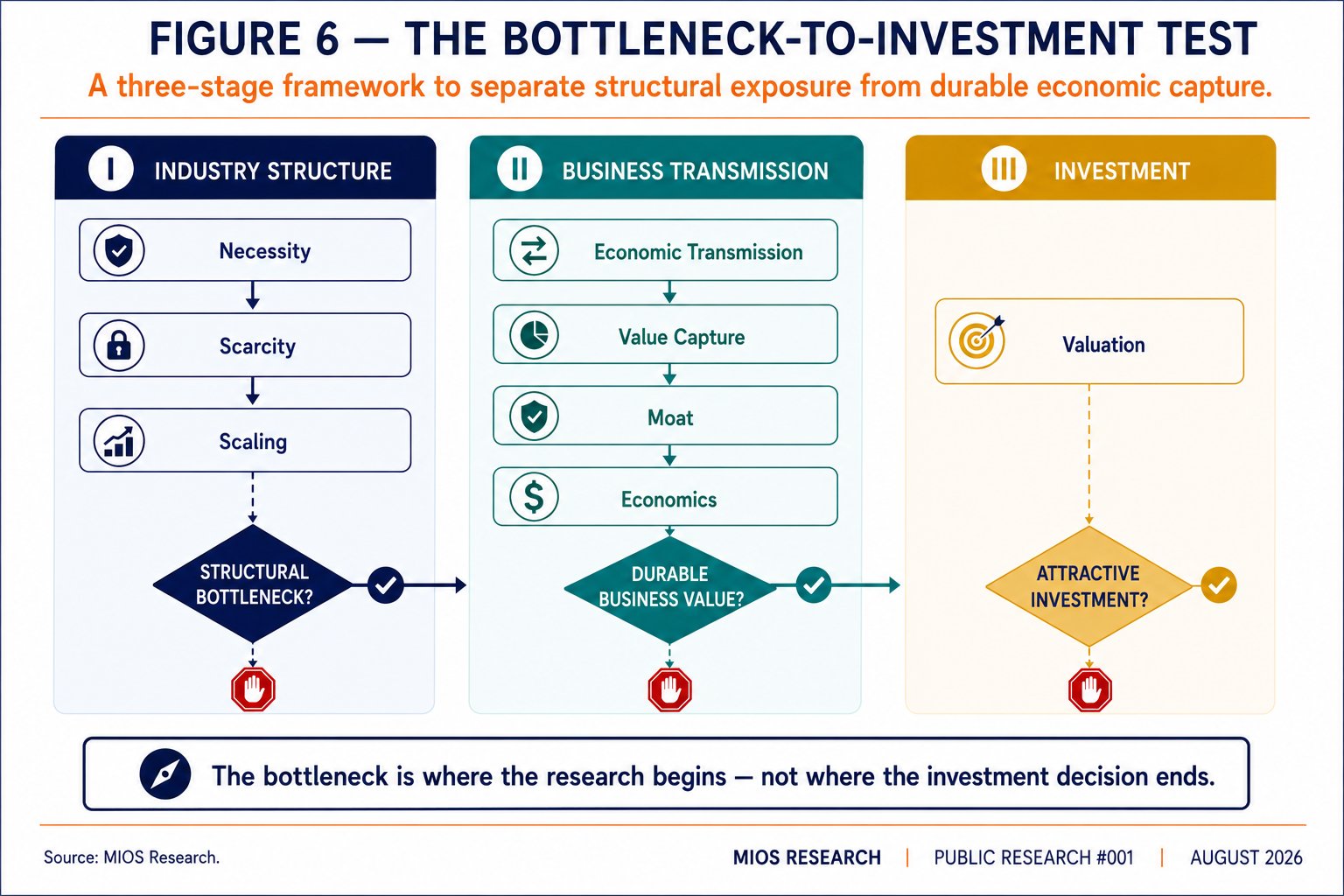
Faster discovery may not remove the bottleneck. It may move it.
AI has demonstrated meaningful productivity gains in the earliest stages of drug discovery. But the evidence weakens sharply as we move toward clinical outcomes.
This distinction matters for investors. The conventional picks-and-shovels thesis assumes that faster AI-enabled discovery will create a flood of viable drug candidates and push bottlenecks downstream. Current evidence does not support that as the baseline case.
A Better, Not More outcome is at least as plausible: AI may improve selection so that more digital hypotheses lead to fewer, but better, physical development programs.
The relevant investment variable is therefore not gross downstream demand, but persistent net scarcity: demand that remains after AI-enabled efficiency and capacity expansion are taken into account.